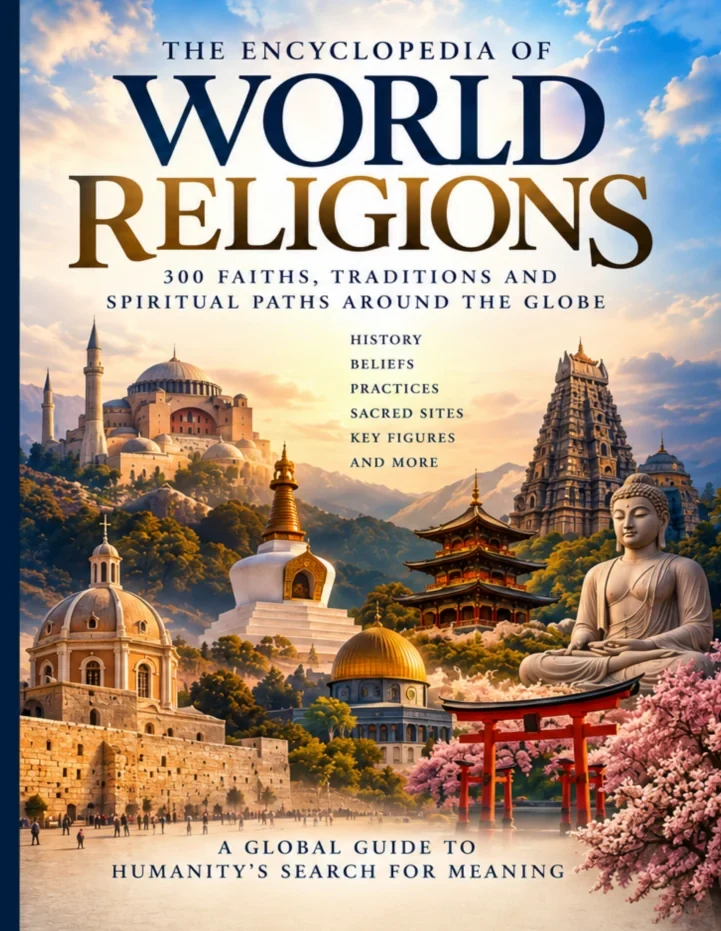
The Encyclopedia of World Religions book cover
Encyclopedias & Reference

The Encyclopedia of World Religions

300 Faiths, Traditions & Spiritual Paths from Around the Globe History, Beliefs, Practices, Sacred Sites & Key Figures

Tudor BooksPaperback
View Paperback on Amazon

Opens the Amazon store you pick. Price and availability are shown on Amazon.

About This Encyclopedia

The Encyclopedia of World Religions presents 300 faiths, spiritual traditions, and belief systems from around the globe. Alphabetical entries introduce origins, beliefs, practices, sacred texts and sites, key figures, and modern presence. Its broad scope invites students and curious readers to explore both major world religions and lesser-known paths with care and context.

What You'll Discover

The 300 entries are arranged alphabetically and bring together major religions, smaller traditions, historical systems, indigenous beliefs, and newer spiritual movements. Each profile aims to identify the tradition, explain its origins and principal beliefs, and describe practices, sacred sources or sites, important figures, and contemporary presence when relevant. The global range makes comparison possible, but the book is meant as an introduction rather than a definitive account of any community's internal diversity.

Topics Covered

  • Beginnings and historical development of traditions
  • Beliefs, rituals, and communal practices
  • Sacred texts and places
  • Founders, teachers, and other key figures
  • Cultural influence and current presence
  • Major world faiths and lesser-known traditions

Who This Book Is For

Religions are presented as lived traditions with histories and communities, not just lists of doctrines. The entry format gives a reader several points of orientation: where a path emerged, how people practice it, which texts or sites matter, and how it appears today. Because the scope reaches three hundred traditions, any one profile is necessarily an overview. The breadth is valuable for readers comparing unfamiliar names, provided they remember that members of a tradition may differ in belief and practice.

Publisher / imprintTudor Books
Published format(s)Paperback
Publication statusLive
ASINB0HK7K61N8
Inside the book

300 religions and traditions, one entry at a time

Sample entries

Adonism

Adonism was a small German esoteric religion developed in the interwar period by the occult writer Franz Sättler, better known in his publications as Dr. Musallam. It belonged to the unusually diverse occult subculture of German-speaking Europe after the First World War.

Read the key facts →

Advaita Vedanta

Advaita Vedanta is one of the most influential schools of Hindu philosophy. Its name means, approximately, 'nondual Vedanta.' It interprets the Upanishads as teaching that Brahman is the fundamental reality of all things and that the true self, atman, is ultimately identical with Brahman.

Read the key facts →

Ahmadiyya

Ahmadiyya is a modern Islamic movement founded by Mirza Ghulam Ahmad in Qadian in the Punjab. The organized community dates its beginning to 1889, when Ahmad accepted a formal pledge of allegiance from followers.

Read the key facts →

Ahom Religion

Ahom religion is the indigenous religious heritage of the Tai Ahom people of Assam. Tai-speaking Ahoms entered the Brahmaputra Valley in the thirteenth century and created a kingdom that endured for roughly six centuries.

Read the key facts →

Full contents

All 300 entries in the book. Entries with a link have a page with key facts and an excerpt.

  1. 001Adonism
  2. 002Advaita Vedanta
  3. 003Ahmadiyya
  4. 004Ahom Religion
  5. 005Ainu Religion
  6. 006Ajahn Chah Tradition
  7. 007Akan Traditional Religion
  8. 008Alawism
  9. 009Alevism
  10. 010Alexandrian Wicca
  11. 011Amarapura Nikaya
  12. 012Anabaptism
  13. 013Ancient Egyptian Religion
  14. 014Ancient Greek Religion
  15. 015Ancient Israelite Religion
  16. 016Anglicanism
  17. 017Armenian Apostolic Christianity
  18. 018Armenian Hetanism
  19. 019Arya Samaj
  20. 020Asatru
  21. 021Ayyavazhi
  22. 022Bábism
  23. 023Baha'i Faith
  24. 024Bangladeshi Buddhism
  25. 025BAPS Swaminarayan Sanstha
  26. 026Baptist Christianity
  27. 027Bathouism
  28. 028Bhutanese Buddhism
  29. 029Bimoism
  30. 030Bishnoi Tradition
  31. 031Bon Religion
  32. 032Brahmo Samaj
  33. 033Buddhism
  34. 034Burmese Folk Religion
  35. 035Burmese Theravada Buddhism
  36. 036Buryat Shamanism
  37. 037Buu Son Ky Huong
  38. 038Cambodian Theravada Buddhism
  39. 039Candomble Angola
  40. 040Candomble Jeje
  41. 041Candomble Ketu
  42. 042Cao Dai
  43. 043Celestial Masters Daoism
  44. 044Celtic Reconstructionist Paganism
  45. 045Chakma Buddhism
  46. 046Chan Buddhism
  47. 047Cheondoism
  48. 048Chinese Esoteric Buddhism
  49. 049Chinese Folk Religion
  50. 050Chinese Pure Land Buddhism
  51. 051Christadelphians
  52. 052Christian Science
  53. 053Church of All Worlds
  54. 054Church of the East
  55. 055Church of the SubGenius
  56. 056Churches of Christ
  57. 057Confucian Religious Tradition
  58. 058Conservative Judaism
  59. 059Coptic Christianity
  60. 060Dadu Panth
  61. 061Daejongism
  62. 062Daesoon Jinrihoe
  63. 063Dhammakaya Tradition
  64. 064Dhammayuttika Nikaya
  65. 065Dharma Drum Mountain
  66. 066Dianic Wicca
  67. 067Digambara Jainism
  68. 068Discordianism
  69. 069Dinka Traditional Religion
  70. 070Donyi-Polo
  71. 071Druidry
  72. 072Drukpa Kagyu
  73. 073Druze Faith
  74. 074Dvaita Vedanta
  75. 075Dzogchen
  76. 076Eastern Orthodox Christianity
  77. 077Eckankar
  78. 078Eclectic Wicca
  79. 079Ethiopian Orthodox Tewahedo Christianity
  80. 080Falun Gong
  81. 081Feraferia
  82. 082Fo Guang Shan
  83. 083Ganapatya
  84. 084Gardnerian Wicca
  85. 085Garo Traditional Religion
  86. 086Gaudiya Vaishnavism
  87. 087Gelug
  88. 088Gnosticism
  89. 089Haitian Vodou
  90. 090Haredi Judaism
  91. 091Hasidic Judaism
  92. 092Heathenry
  93. 093Hellenism
  94. 094Hermeticism
  95. 095Hindu Balinese Religion
  96. 096Hindu Tantra
  97. 097Hinduism
  98. 098Hoa Hao Buddhism
  99. 099Hoodoo
  100. 100Huayan Buddhism
  101. 101Humanistic Buddhism
  102. 102Ibadism
  103. 103Ifa Tradition
  104. 104Igbo Traditional Religion
  105. 105Iglesia ni Cristo
  106. 106Insight Meditation Movement
  107. 107ISKCON
  108. 108Islam
  109. 109Ismailism
  110. 110Jainism
  111. 111Japanese Buddhism
  112. 112Jediism
  113. 113Jehovah's Witnesses
  114. 114Jeung San Do
  115. 115Jeungsanism
  116. 116Jewish Renewal
  117. 117Jodo Shinshu
  118. 118Jodo Shu
  119. 119Jogye Buddhism
  120. 120Judaism
  121. 121Kabir Panth
  122. 122Kagyu
  123. 123Kaharingan
  124. 124Karaite Judaism
  125. 125Karma Kagyu
  126. 126Kashmir Shaivism
  127. 127Kaumaram
  128. 128Kemetic Orthodoxy
  129. 129Kemetism
  130. 130Khalsa
  131. 131Khasi Traditional Religion
  132. 132Kirat Mundhum
  133. 133Kongo Traditional Religion
  134. 134Konkokyo
  135. 135Korean Buddhism
  136. 136Krishnaism
  137. 137Lao Theravada Buddhism
  138. 138Latter-day Saint Movement
  139. 139Lingayatism
  140. 140Longmen Daoism
  141. 141Louisiana Voodoo
  142. 142Lutheranism
  143. 143Madhva Sampradaya
  144. 144Maha Nikaya
  145. 145Mahayana Buddhism
  146. 146Mahayana Buddhism in China
  147. 147Malagasy Traditional Religion
  148. 148Manchu Shamanism
  149. 149Mandaeism
  150. 150Manichaeism
  151. 151Mari Native Religion
  152. 152Maronite Christianity
  153. 153Mennonitism
  154. 154Methodism
  155. 155Mongolian Buddhism
  156. 156Mongolian Shamanism
  157. 157Moorish Science Temple of America
  158. 158Moravian Christianity
  159. 159Muism
  160. 160Namdhari Sikh Tradition
  161. 161Nath Tradition
  162. 162Nation of Islam
  163. 163Navayana Buddhism
  164. 164Neo-Confucianism
  165. 165Nepalese Buddhism
  166. 166Nepalese Theravada Buddhism
  167. 167New Apostolic Church
  168. 168Newar Buddhism
  169. 169Nichiren Buddhism
  170. 170Nichiren Shoshu
  171. 171Nichiren Shu
  172. 172Nihang Sikh Tradition
  173. 173Nimbarka Sampradaya
  174. 174Nirankari Movement
  175. 175Nizari Ismailism
  176. 176Nuer Traditional Religion
  177. 177Nyingma
  178. 178Obaku Zen
  179. 179Oomoto
  180. 180Oriental Orthodoxy
  181. 181Orthodox Judaism
  182. 182Pashupata Shaivism
  183. 183Pastafarianism
  184. 184Pentecostalism
  185. 185Plum Village Tradition
  186. 186Prarthana Samaj
  187. 187Presbyterianism
  188. 188Pure Land Buddhism
  189. 189Pushtimarg
  190. 190Quakerism
  191. 191Quanzhen Daoism
  192. 192Quimbanda
  193. 193Rabbinic Judaism
  194. 194Radha Soami Satsang Beas
  195. 195Radha Soami Tradition
  196. 196Ramakrishna Movement
  197. 197Ramanandi Tradition
  198. 198Ramanna Nikaya
  199. 199Rastafari
  200. 200Ravidassia Religion
  201. 201Reconstructionist Judaism
  202. 202Reform Judaism
  203. 203Reformed Christianity
  204. 204Reiyukai
  205. 205Restoration Movement
  206. 206Rinzai Zen
  207. 207Rissho Kosei-kai
  208. 208Roman Catholicism
  209. 209Roman Religio
  210. 210Romuva
  211. 211RUNVira
  212. 212Ryukyuan Religion
  213. 213Sakya
  214. 214Samaritanism
  215. 215Sanamahism
  216. 216Sant Mat
  217. 217Sant Nirankari Mission
  218. 218Santeria / Regla de Ocha
  219. 219Sarnaism
  220. 220Sathya Sai Movement
  221. 221Satsana Phi
  222. 222Saura Tradition
  223. 223Secular Buddhism
  224. 224Seicho-no-Ie
  225. 225Seon Buddhism
  226. 226Serer Religion
  227. 227Sethianism
  228. 228Seventh-day Adventism
  229. 229Shaiva Siddhanta
  230. 230Shaivism
  231. 231Shaktism
  232. 232Shia Islam
  233. 233Shingon Buddhism
  234. 234Shinnyo-en
  235. 235Shinto
  236. 236Shri Vidya
  237. 237Shugendo
  238. 238Shwegyin Nikaya
  239. 239Siam Nikaya
  240. 240Sikhism
  241. 241Slavic Native Faith (Rodnovery)
  242. 242Smartism
  243. 243Soka Gakkai
  244. 244Soto Zen
  245. 245Sri Lankan Forest Monastic Tradition
  246. 246Sri Lankan Theravada Buddhism
  247. 247Sri Vaishnavism
  248. 248Sthanakavasi Jainism
  249. 249Sufism
  250. 250Sunni Islam
  251. 251Svetambara Jainism
  252. 252Swaminarayan Tradition
  253. 253Swedenborgianism
  254. 254Syriac Orthodox Christianity
  255. 255Tai Folk Religion
  256. 256Taiwanese Buddhism
  257. 257Taoism / Daoism
  258. 258Tendai Buddhism
  259. 259Tenggerese Religion
  260. 260Tengrism
  261. 261Tenrikyo
  262. 262Terapanth Jainism
  263. 263Thai Buddhism
  264. 264Thai Forest Tradition
  265. 265Theodism
  266. 266Theravada Buddhism
  267. 267Thien Buddhism
  268. 268Thudhamma Nikaya
  269. 269Tiantai Buddhism
  270. 270Tibetan Buddhism
  271. 271Transcendental Meditation Movement
  272. 272Triratna Buddhist Community
  273. 273Truc Lam Buddhism
  274. 274Twelver Shiism
  275. 275Tzu Chi
  276. 276Udmurt Traditional Religion
  277. 277Umbanda
  278. 278Unitarian Christianity
  279. 279Vaishnavism
  280. 280Vajrayana Buddhism
  281. 281Valentinianism
  282. 282Vietnamese Buddhism
  283. 283Vietnamese Folk Religion
  284. 284Vipassana Movement
  285. 285Vishishtadvaita Vedanta
  286. 286Waaqeffanna
  287. 287West African Vodun
  288. 288Wicca
  289. 289Won Buddhism
  290. 290Yakut / Sakha Religion
  291. 291Yarsanism
  292. 292Yazidism
  293. 293Yiguandao
  294. 294Yoruba Religion
  295. 295Zaydism
  296. 296Zen Buddhism
  297. 297Zhengyi Daoism
  298. 298Zoroastrianism
  299. 299Zulu Traditional Religion
  300. 300Zurvanism

Frequently asked questions

How many religions does the book cover?

The Encyclopedia of World Religions has 300 entries covering religions, denominations, philosophical schools, indigenous traditions, revival movements and historical religious currents.

What does each entry include?

Each entry opens with a quick-facts block (family, origin, period, founder, ultimate reality, texts, languages, symbols, regions, estimated followers and status), then covers overview, core beliefs, practices, cosmology, history, festivals, a "Did you know?" note, related traditions and a note on how well documented the tradition is.

Does the book promote or criticize any religion?

No. The book describes itself as descriptive, not as an endorsement or criticism of any tradition, and it separates religious claims from what can be established historically where needed.

How reliable are the follower numbers?

The book says estimated followers should be read as an orientation, not a census-level measurement, because names, estimates, dates and interpretations vary among communities and scholarly sources.

Where can I buy the book?

The paperback is sold on Amazon. Choose your country in the selector on this page to open the matching Amazon store.

More from Tudor Books

Related books

Gift ideas

Gift guides that include this book