History of Luxury
Yves Saint Laurent: The Story of Modern Elegance, Parisian Fashion, and the House That Changed Style
Explore History of Luxury: Yves Saint Laurent →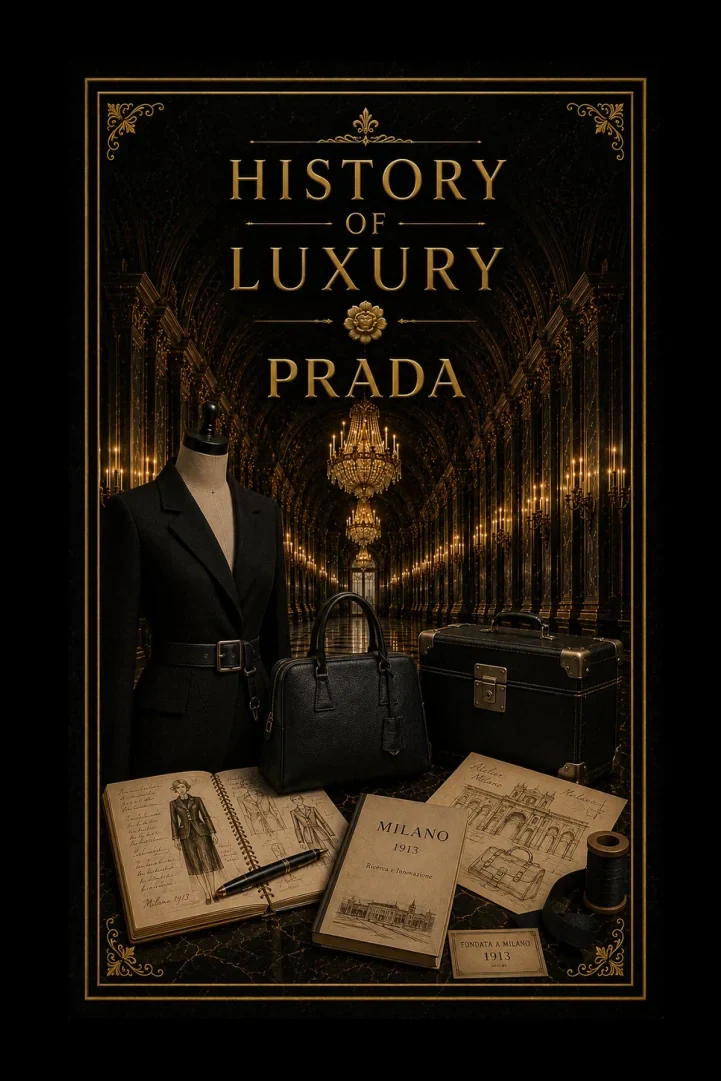
Prada: The Story of Italian Craftsmanship, Modern Fashion, and the House That Redefined Elegance
Opens the Amazon store you pick. Price and availability are shown on Amazon.
History of Luxury: Prada examines the Milanese house through craftsmanship, intellectual design, and modern fashion. Beginning with its leather-goods heritage, the story follows a creative identity associated with restraint, experimentation, and ready-to-wear. Discover how Prada's distinctive approach came to shape the idea of contemporary luxury.
The narrative opens with the brothers Prada and the Milanese setting in which their leather-goods business developed. It follows changes in the family and the market before Miuccia Prada entered the business. Chapters on her direction, Patrizio Bertelli, nylon, and “ugly chic” show how the house moved from established craft into a distinctive modern fashion language.
The book's subject is the tension between tradition and reinvention. Its cover names leather goods, ready-to-wear, intellectual vision, and minimalist design, while the manuscript's sequence shows how these became part of a larger brand story. Rather than presenting a list of products, it traces decisions and cultural shifts that changed what luxury could look like.
Nylon is a useful case in this history because it changes the assumptions a reader might bring to a luxury house known for leather. The manuscript treats that material choice as part of a broader reinvention under Miuccia Prada and Patrizio Bertelli. “Ugly chic” likewise names a challenge to conventional prettiness, not a rejection of craft. By tracing earlier generations first, the book shows that reinvention had an inherited business to work with. It offers a way to examine how a fashion house can preserve a name while changing the language associated with it.
Readers curious about Italian design and the history of fashion houses can use this as a chronological introduction. It is an independent Tudor Books history, not an official Prada publication or a buying guide. As part of History of Luxury, it can be compared with volumes on houses that built their reputations through very different materials and styles.
The shop had no sign above the door. It did not need one. In Milan in 1913, if you moved in the right circles, you already knew where it was — on the south side of the Galleria Vittorio Emanuele II, tucked beneath the soaring iron-and-glass vault that made the arcade feel like a cathedral built for commerce. The address alone communicated something. The Galleria was not merely a shopping passage; it was the social spine of the city, the place where the industrial north displayed its confidence in marble and light.
All 40 chapters in the book.
The contents list 40 chapters, shown in full on this page. The manuscript runs to roughly 280,000 words.
Prada: The Story of Italian Craftsmanship, Modern Fashion, and the House That Redefined Elegance.
No. This page shows the contents and a short opening excerpt. The complete book is sold on Amazon (Paperback).
The book is sold on Amazon. Choose your country in the selector on this page to open the matching Amazon store.
Yves Saint Laurent: The Story of Modern Elegance, Parisian Fashion, and the House That Changed Style
Explore History of Luxury: Yves Saint Laurent →Versace: The Story of Italian Glamour, Bold Design, and the Fashion House That Changed Modern Style
Explore History of Luxury: Versace →Louis Vuitton: The Story of Travel, Trunks, Craftsmanship, and the Maison That Changed Modern Luxury
Explore History of Luxury: Louis Vuitton →Hermès: The Story of Craftsmanship, Silk, Leather, and the Maison That Shaped Quiet Luxury
Explore History of Luxury: Hermès →