Lost Treasures & Cursed Riches
A Global History of Hidden Wealth, Stolen Empires, Sacred Relics, and the Myths That Refuse to Die
Explore Lost Treasures & Cursed Riches →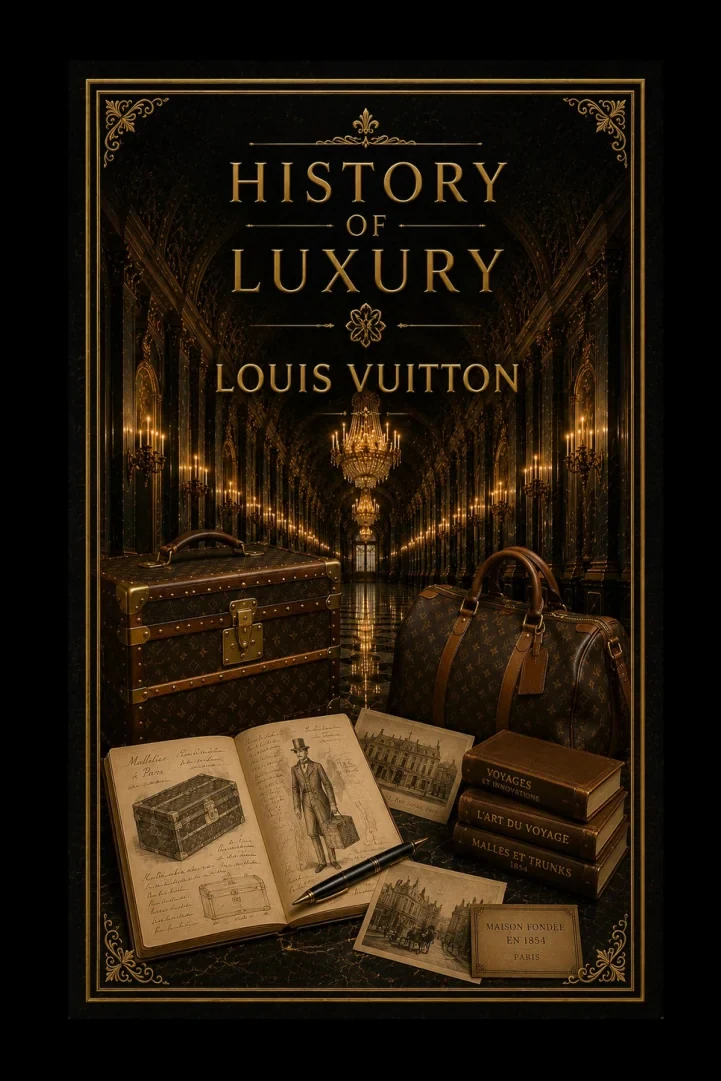
Louis Vuitton: The Story of Travel, Trunks, Craftsmanship, and the Maison That Changed Modern Luxury
Opens the Amazon store you pick. Price and availability are shown on Amazon.
History of Luxury: Louis Vuitton follows a house built on travel and fine craftsmanship. From its trunk-making origins to the global fashion brand, the book explores the ideas, objects, and decisions behind its evolution. The story connects practical design with the cultural meaning of luxury and the enduring monogram.
Louis Vuitton's early journey from Anchay to Paris and apprenticeship under Monsieur Maréchal begins the book. Chapters on work for Empress Eugénie, the founding of the business, trunk design, and travel in the steam age explain why packaging and transport were central to the house. The move to Asnières and the next generation bring expansion into the narrative.
Later verified chapters follow Georges Vuitton, attempts to fight counterfeits, the Monogram canvas, international markets, and new bags such as the Keepall. These subjects show how a workshop associated with travel adapted its products and identity as travel itself changed. The book joins the biography of a founder to the longer history of a family enterprise.
The chapters on counterfeit goods and the Monogram canvas make an unexpected connection between design and protection of identity. A trunk had to perform as luggage, but a growing company also needed customers to recognize its work. The book follows that dual problem as travel expanded and later bags answered new habits. Louis Vuitton's life is only the start of the house's history; Georges and subsequent changes carry the narrative forward. Readers interested in the craft can see how an everyday practical object became a platform for status and global commerce.
This independent Tudor Books volume is for readers of craftsmanship, travel history, and luxury brands. It is not an official Louis Vuitton publication or a guide to authenticating merchandise. The chronological format helps a reader understand why trunks, patterns, and bags became enduring symbols of the house.
The village of Anchay sits at the edge of the Jura plateau, where the land folds sharply downward toward the valley of the Ain and the great arc of the Alps appears on clear mornings as a white wall against the eastern sky. In August 1821, the year Louis Vuitton was born, the village contained perhaps two hundred souls, most of them bound to the same occupations their grandparents had practised: cultivating the thin limestone soil, grazing cattle on the high pastures, and working the timber that came down from the forests above.
All 40 chapters in the book.
The contents list 40 chapters, shown in full on this page. The manuscript runs to roughly 170,000 words.
Louis Vuitton: The Story of Travel, Trunks, Craftsmanship, and the Maison That Changed Modern Luxury.
No. This page shows the contents and a short opening excerpt. The complete book is sold on Amazon (Paperback).
The book is sold on Amazon. Choose your country in the selector on this page to open the matching Amazon store.
A Global History of Hidden Wealth, Stolen Empires, Sacred Relics, and the Myths That Refuse to Die
Explore Lost Treasures & Cursed Riches →A Global History of Censorship, Suppressed Knowledge, and the Battle to Control What We Read
Explore Forbidden Books →A Global History of Forgery, Currency, and Trust
Explore History of Counterfeit Money →