History of Luxury
Prada: The Story of Italian Craftsmanship, Modern Fashion, and the House That Redefined Elegance
Explore History of Luxury: Prada →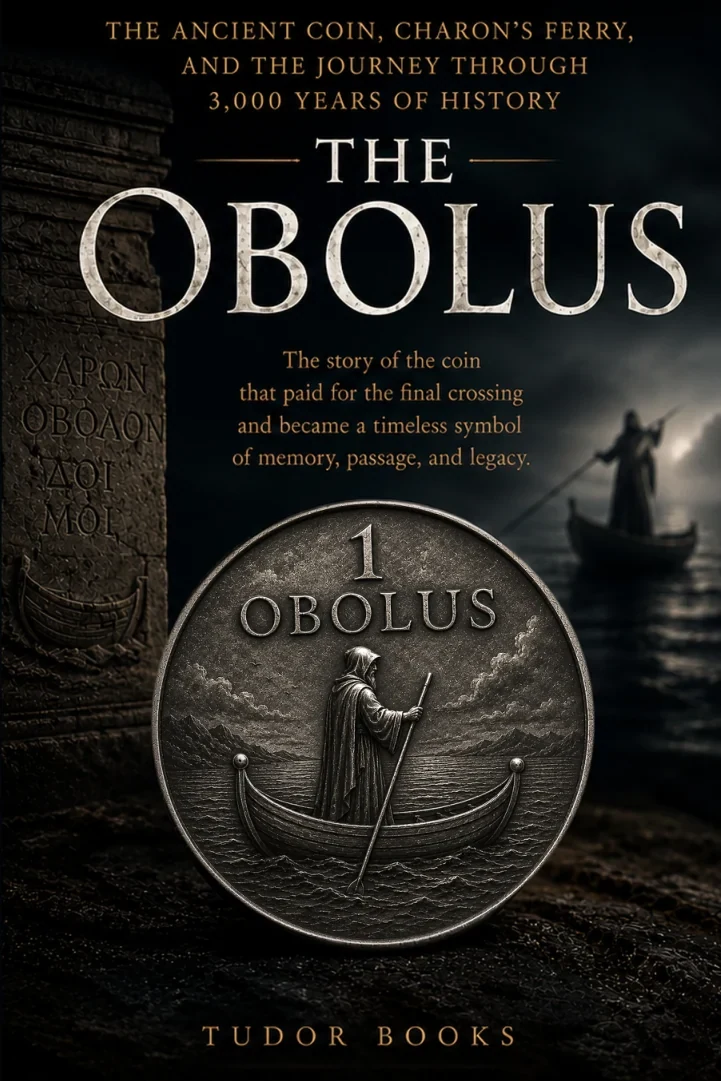
The Ancient Coin, Charon's Ferry, and the 3,000-Year History of the World's Most Enduring Symbol of the Final Journey
Opens the Amazon store you pick. Price and availability are shown on Amazon.
The Obolus follows a small coin through three thousand years of history, archaeology, ritual, and myth. Beginning with the Greek practice of placing a payment for Charon with the dead, the book traces the symbol through Rome, medieval Europe, and later memory. Its story connects money with passage and the ways people say goodbye.
The obolus is small enough to fit in a hand but carries a long history of exchange and burial. The manuscript's first parts examine the coin before the ferryman story and then turn to Charon and the price of passage. Sections on Greek funerary practices and the wider Roman world distinguish an ancient ritual from the later shorthand in which every coin placed with the dead becomes “Charon's obol.”
The book goes on to compare symbols of passage in other settings and to follow the motif through Christianity, folklore, and modern remembrance. A section devoted to the science of the obolus asks what archaeological evidence can show about where coins were placed and how practices varied. These questions connect myth, material objects, and the difficulty of interpreting a grave centuries later.
The book's eight-part design gradually changes its evidence. Early sections draw on classical stories and Greek or Roman practices; later sections consider folklore and archaeological interpretation. Those sources cannot all answer the same question. A myth can show how people imagined passage after death, while a coin recovered from a burial can show a particular material act whose meaning still needs care. This distinction gives the obolus a richer history than a single claim about a universal funeral payment. It also explains why the symbol has remained recognizable in modern retellings.
Readers of ancient religion, archaeology, numismatics, and cultural history can follow a single object across three millennia of stories. The book does not assume one unchanged custom everywhere. It asks why a modest coin became a powerful image of the final journey and how the living have used it to express care, duty, and memory.
Prada: The Story of Italian Craftsmanship, Modern Fashion, and the House That Redefined Elegance
Explore History of Luxury: Prada →Louis Vuitton: The Story of Travel, Trunks, Craftsmanship, and the Maison That Changed Modern Luxury
Explore History of Luxury: Louis Vuitton →Hermès: The Story of Craftsmanship, Silk, Leather, and the Maison That Shaped Quiet Luxury
Explore History of Luxury: Hermès →Gucci: From a Florentine Leather Shop to Global Fashion Empire — The Complete Story of Gucci, Italian Craftsmanship &…
Explore History of Luxury: Gucci →