History of Luxury
Louis Vuitton: The Story of Travel, Trunks, Craftsmanship, and the Maison That Changed Modern Luxury
Explore History of Luxury: Louis Vuitton →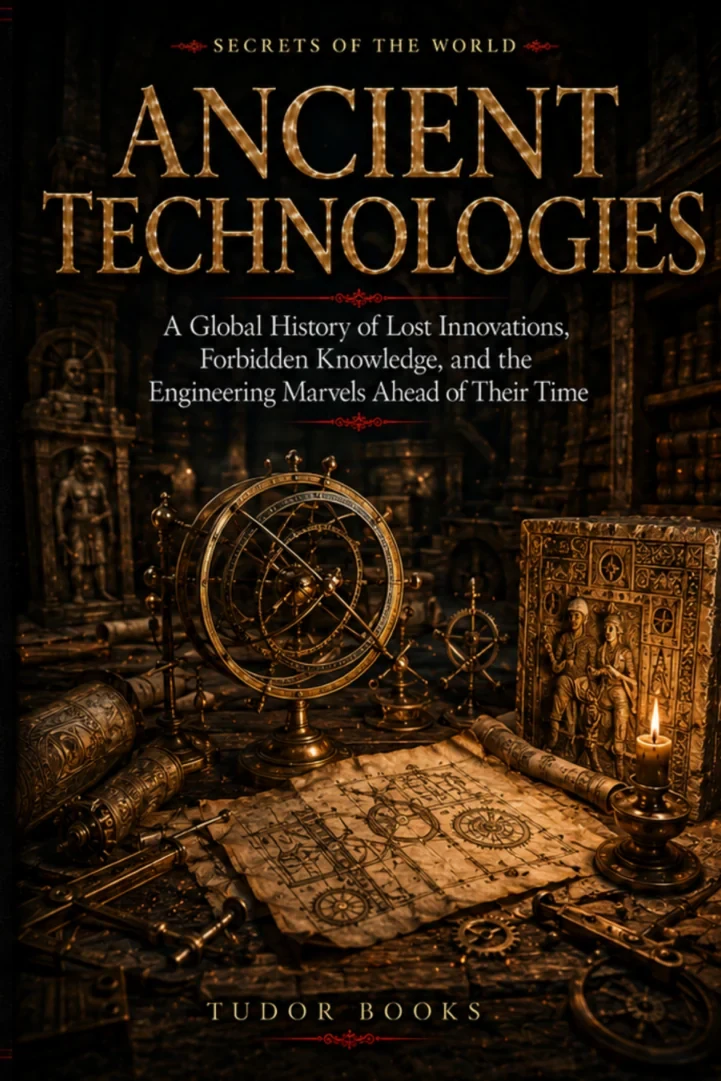
A Global History of Lost Inventions, Impossible Monuments, and the Engineering Secrets of the Ancient World
Opens the Amazon store you pick. Price and availability are shown on Amazon.
Ancient Technologies explores engineering, materials, machines, and ideas from past civilizations. Its global narrative considers monuments, innovations, guarded knowledge, and inventions later lost or reinterpreted. Readers interested in archaeology and the history of science can follow how practical ingenuity shaped the ancient world and why some achievements still invite questions.
The manuscript begins by challenging the idea that earlier people lacked sophisticated problem-solving. Its chapters examine first tools, agriculture, rope and wood, measurement, calendars and astronomical instruments, and the labor and logistics behind monumental construction. Later cases include Göbekli Tepe and Stonehenge. The sequence grounds seemingly extraordinary achievements in materials, skills, and organized work.
The title's language of “lost inventions” invites curiosity, but the manuscript's first chapters ask readers to examine how we know what people did. A tool may survive without the rope or wood that made it useful; a monument may survive while the work organization behind it is less visible. Measurement and astronomy, likewise, have material histories that need not resemble modern instruments. By raising the possibility of lost context as well as lost knowledge, the book offers a more grounded way to appreciate technical achievement. It connects particular sites with broader questions about evidence, labor, and interpretation.
The book is aimed at readers of archaeology, engineering history, and ancient science. It asks whether knowledge was actually lost, whether its context changed, or whether modern observers have misunderstood the techniques involved. That distinction matters: a remarkable monument does not by itself prove a mysterious lost civilization. The narrative uses specific technologies and sites to explore what people in the past could make, measure, coordinate, and pass on.
The antler punch slips on the third strike. It happens fast: the tool skids off the prepared platform, the flake sheers at the wrong angle, and what should have been a clean parallel-sided blade is now a thick crescent of rubbish flint with a hinge fracture running across it like a scar. The archaeologist sets the core down on the worktable, picks up the waster, holds it against the fluorescent light overhead, and allows himself a short unprofessional oath. He has been knapping flint for eleven years. He teaches courses on it. He has published papers on the reduction sequences of the Upper Palaeolithic, and he still loses a core to a bad strike once every hour or so.
All 40 chapters in the book.
The contents list 40 chapters, shown in full on this page. The manuscript runs to roughly 150,000 words.
A Global History of Lost Inventions, Impossible Monuments, and the Engineering Secrets of the Ancient World.
No. This page shows the contents and a short opening excerpt. The complete book is sold on Amazon (Paperback).
The book is sold on Amazon. Choose your country in the selector on this page to open the matching Amazon store.
Louis Vuitton: The Story of Travel, Trunks, Craftsmanship, and the Maison That Changed Modern Luxury
Explore History of Luxury: Louis Vuitton →Hermès: The Story of Craftsmanship, Silk, Leather, and the Maison That Shaped Quiet Luxury
Explore History of Luxury: Hermès →Gucci: From a Florentine Leather Shop to Global Fashion Empire — The Complete Story of Gucci, Italian Craftsmanship &…
Explore History of Luxury: Gucci →Dior: From the New Look Revolution to Haute Couture Icon — The Complete Story of Christian Dior, Timeless Elegance &…
Explore History of Luxury: Dior →