The History of Champagne
The History of Champagne follows a sparkling wine from early vineyards to a global symbol of celebration.
Explore The History of Champagne →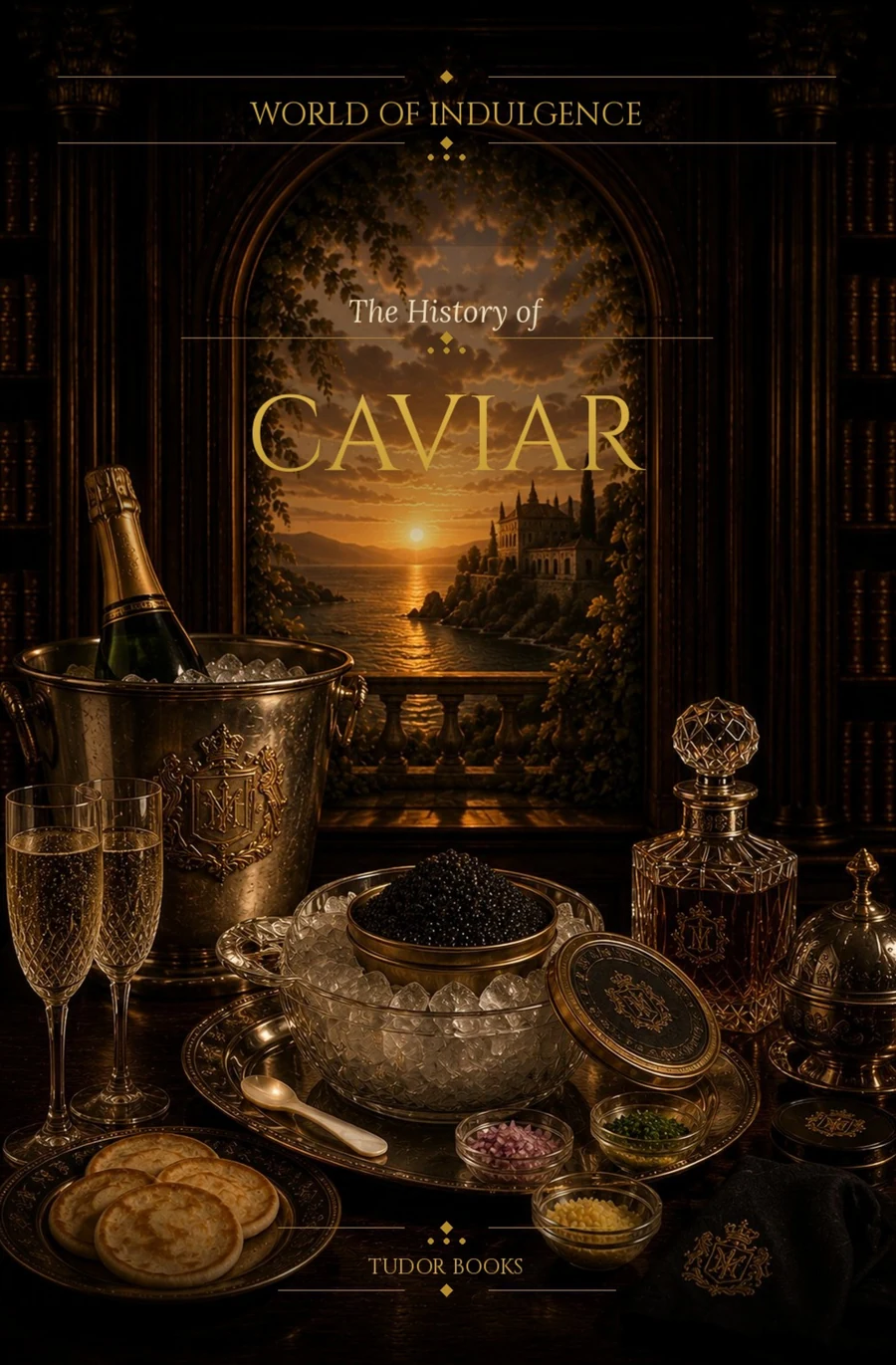
Opens the Amazon store you pick. Price and availability are shown on Amazon.
The History of Caviar follows sturgeon roe from river fisheries to a symbol of prestige. The Caspian region, methods of preparation, trade, and changing ideas of luxury provide the setting for a story of scarcity and desire. Explore how a food once gathered at the water's edge became a global delicacy.
The book starts with sturgeon and river fisheries before moving to the preservation and movement of roe. The Caspian region is central to the historical account, but the story also follows traders, rulers, and changing markets. A perishable food becoming a global symbol of prestige required both practical handling and a story about scarcity.
Preparation methods and trade shaped what could reach distant tables. Later ideas of luxury changed demand and the meaning attached to caviar. The narrative links the natural history of a fish with the human history of extraction, exchange, and desire. It leaves room for the ecological questions that follow when a prized product depends on a vulnerable resource.
Scarcity in this history is both ecological and commercial. Sturgeon mature slowly, and the demand for their roe could put pressure on fisheries; preservation and transport meanwhile created access to distant markets. The book's movement from river work to elite tables shows that prestige is not an inherent property of a food. It is made through rarity, taste, presentation, and social power. Readers interested in luxury can follow that process while keeping the fish and the people who caught it in view. The story is richer than a catalog of expensive servings.
Readers interested in food history and luxury can follow the journey from water to marketplace and table. The book is a historical account, not a guide to current prices or a claim about the quality of any particular caviar. It asks how prestige was created and what the pursuit of a delicacy has meant for people and the species involved.
Before the first trader wrapped salt-cured roe in cloth and carried it inland on horseback, before the first emperor pressed a silver spoon to his lips and declared it worthy of a throne room, there was only the river and the fisherman. Picture the western shore of the Caspian Sea at first light, sometime in the centuries before the Christian era. The water is cold and heavy with silt carried down from the mountains of Persia and the Caucasus. A narrow wooden boat rocks gently in the shallows. Two men stand knee-deep, their feet sinking into soft mud, drawing a coarse linen net hand over hand toward the surface. The morning smells of reed grass and wet stone.
All 12 chapters in the book.
The contents list 12 chapters, shown in full on this page. The manuscript runs to roughly 95,000 words.
No. This page shows the contents and a short opening excerpt. The complete book is sold on Amazon (Paperback).
The book is sold on Amazon. Choose your country in the selector on this page to open the matching Amazon store.
The History of Champagne follows a sparkling wine from early vineyards to a global symbol of celebration.
Explore The History of Champagne →The History of Wine travels from early viticulture through Greece, Rome, monasteries, medieval commerce, and the vine's spread across oceans.
Explore The History of Wine →The History of Chocolate traces cacao from Mesoamerica through Maya and Aztec traditions, European courts, industrial production, and modern craft.
Explore The History of Chocolate →