The History of Wine
The History of Wine travels from early viticulture through Greece, Rome, monasteries, medieval commerce, and the vine's spread across oceans.
Explore The History of Wine →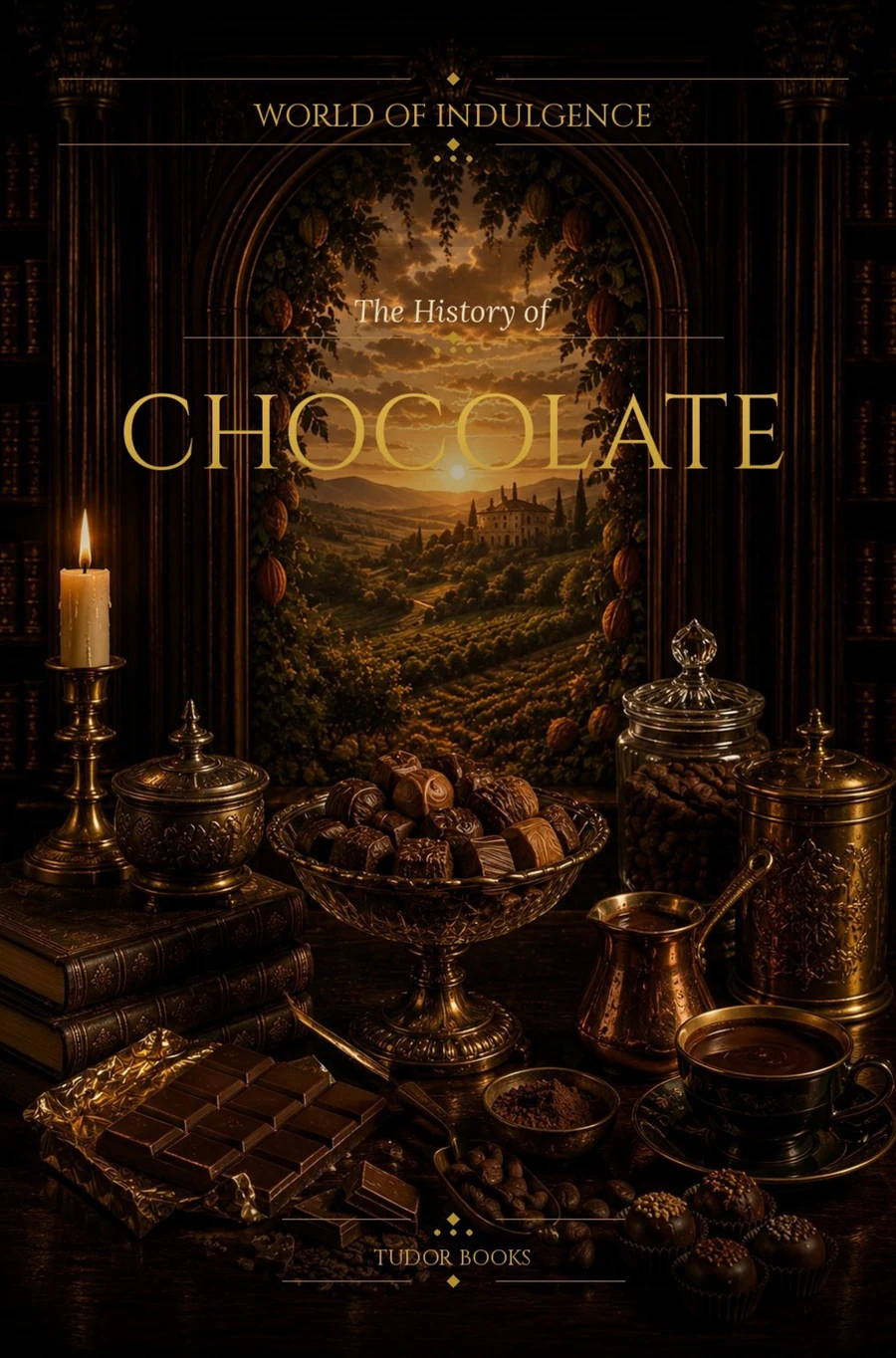
Opens the Amazon store you pick. Price and availability are shown on Amazon.
The History of Chocolate traces cacao from Mesoamerica through Maya and Aztec traditions, European courts, industrial production, and modern craft. Along the way, a bitter seed becomes a global food with a complex cultural and commercial story. Discover the people and processes behind chocolate's many transformations.
The introduction presents cacao's transformation as a story of human ingenuity and power, not merely sweetness. The narrative begins in Mesoamerica, including Maya and Aztec uses of cacao, then follows its passage to Europe. Courtly fashion, changing recipes, and wider trade altered both the product and the meaning attached to it.
Industrial methods eventually made chocolate available in forms and quantities far removed from its earlier settings. The book also looks at the commercial systems and labor that supported a global market, and at later craft approaches that revisit origin and technique. Those shifts explain why the history of a familiar treat has cultural and economic depth.
The move from Mesoamerican cacao to European court chocolate changed ingredients and social setting. Industrialization changed who could obtain the product at all. Those are different kinds of transformation, and the narrative considers both. Modern craft chocolate adds another turn by drawing attention back to beans, origin, and technique. The book gives readers a way to connect the taste they know with the agricultural and commercial structures that made it possible. It also asks what can be lost when a complex history is reduced to a familiar sweet bar.
This is for readers interested in food history, colonial exchange, manufacturing, and changing taste. The chronological story invites a comparison between a bitter seed in its original contexts and the many products later called chocolate. It is a history of people and processes, not a recipe collection.
This is a book about chocolate — but it is not, in the end, a book about food. It is a book about human civilization and one of its most remarkable obsessions: the determination, repeated in every age and on every continent that has encountered the cacao bean, to take something bitter and difficult and strange from the natural world and transform it, through patience and ingenuity and accumulated knowledge, into something extraordinary.
All 12 chapters in the book.
The contents list 12 chapters, shown in full on this page. The manuscript runs to roughly 90,000 words.
No. This page shows the contents and a short opening excerpt. The complete book is sold on Amazon (Paperback).
The book is sold on Amazon. Choose your country in the selector on this page to open the matching Amazon store.
The History of Wine travels from early viticulture through Greece, Rome, monasteries, medieval commerce, and the vine's spread across oceans.
Explore The History of Wine →The History of Caviar follows sturgeon roe from river fisheries to a symbol of prestige.
Explore The History of Caviar →The History of Champagne follows a sparkling wine from early vineyards to a global symbol of celebration.
Explore The History of Champagne →