The History of Caviar
The History of Caviar follows sturgeon roe from river fisheries to a symbol of prestige.
Explore The History of Caviar →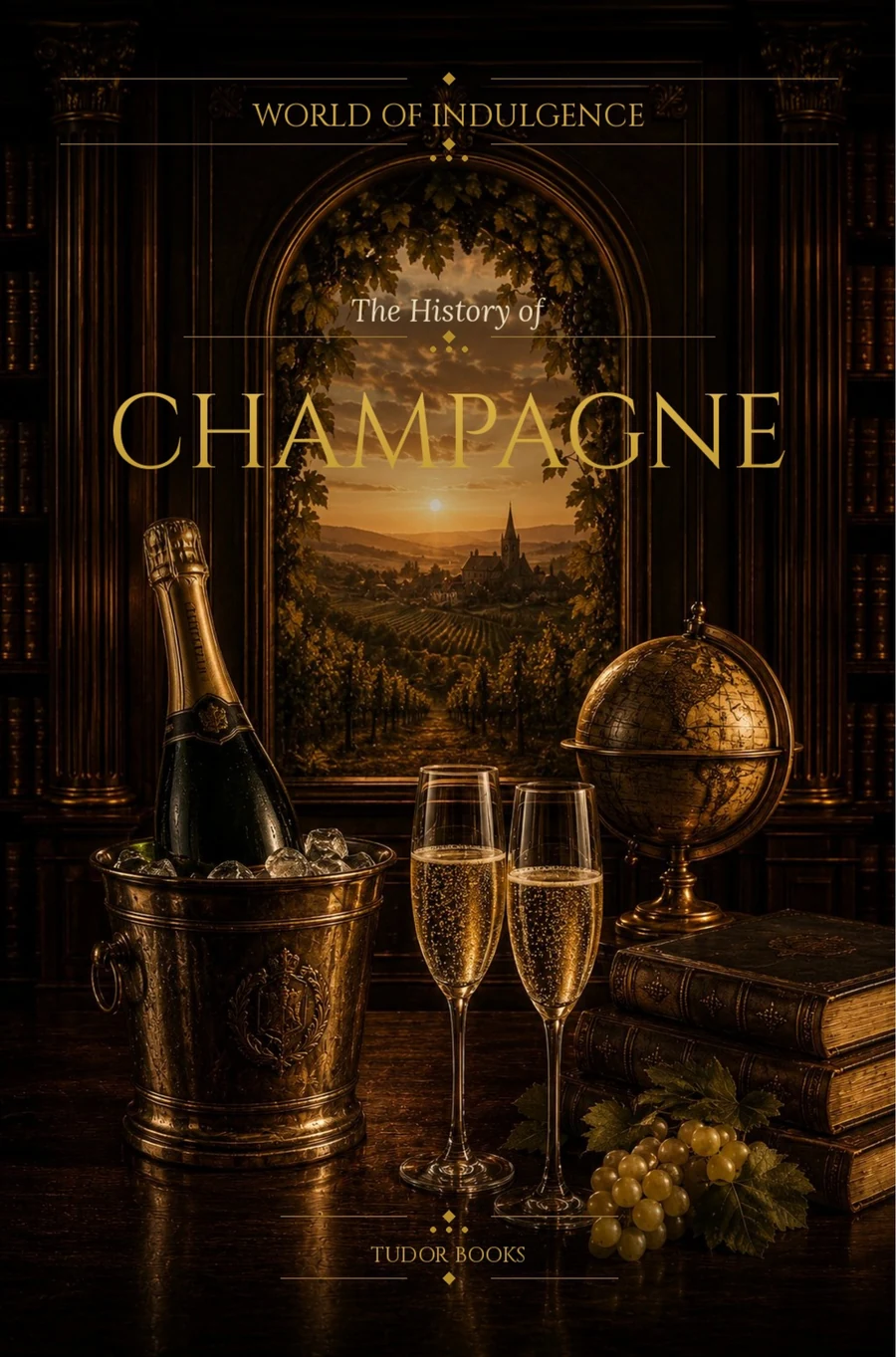
Opens the Amazon store you pick. Price and availability are shown on Amazon.
The History of Champagne follows a sparkling wine from early vineyards to a global symbol of celebration. The narrative explores royal courts, major Champagne houses, science, war, changing markets, and the people who shaped the region's reputation. Read the story behind the bottle through culture, commerce, and craft.
The twelve-chapter narrative starts with sparkling wine's origins and the emergence of Champagne as a region and a name. Kings, courts, and aristocratic taste give way to industrial production and the great houses. The verified contents include the Widow Clicquot, the science of bubbles, and the role of technical change in making a consistent product. These subjects explain why the drink's history involves both craft and commerce.
War, crisis, and recovery alter the story before Champagne becomes a global cultural symbol. Later chapters consider the industry, luxury collecting, and possible futures. The introduction frames the book as a narrative history rather than a tasting guide. It looks at the people and institutions behind a celebrated bottle and the pressures that changed their work.
The chapter on Widow Clicquot sits at the meeting point of individual initiative and technical progress, while the science chapter explains why sparkling wine requires more than an appealing label. The war and crisis sections make clear that prestige was not an uninterrupted rise. Regional producers faced risks to vineyards, markets, and transport, then had to rebuild the image of a celebratory drink. A reader can use the book to connect those material pressures with the cultural scenes in which Champagne appeared. Its “future” chapter extends the history into questions about how a protected regional product will adapt.
Readers of food, wine, and European history can use this volume to follow how one regional product acquired international meaning. Its chapter sequence connects vineyards, production, trade, and image, letting the familiar ritual of celebration rest on a much longer history.
The book you are holding began with a simple observation and an immodest ambition. The observation was that Champagne — the most celebrated wine in the world, the subject of more celebrations and more cultural associations than any other beverage in human history — had never been given the comprehensive, narrative history that its extraordinary story deserves. There are books about Champagne's science, about individual houses, about vintages and tasting notes. There are coffee-table volumes of gorgeous photography and slim introductions for the curious beginner.
All 12 chapters in the book.
The contents list 12 chapters, shown in full on this page. The manuscript runs to roughly 95,000 words.
No. This page shows the contents and a short opening excerpt. The complete book is sold on Amazon (Paperback).
The book is sold on Amazon. Choose your country in the selector on this page to open the matching Amazon store.
The History of Caviar follows sturgeon roe from river fisheries to a symbol of prestige.
Explore The History of Caviar →The History of Wine travels from early viticulture through Greece, Rome, monasteries, medieval commerce, and the vine's spread across oceans.
Explore The History of Wine →The History of Chocolate traces cacao from Mesoamerica through Maya and Aztec traditions, European courts, industrial production, and modern craft.
Explore The History of Chocolate →