Lost Treasures & Cursed Riches
A Global History of Hidden Wealth, Stolen Empires, Sacred Relics, and the Myths That Refuse to Die
Explore Lost Treasures & Cursed Riches →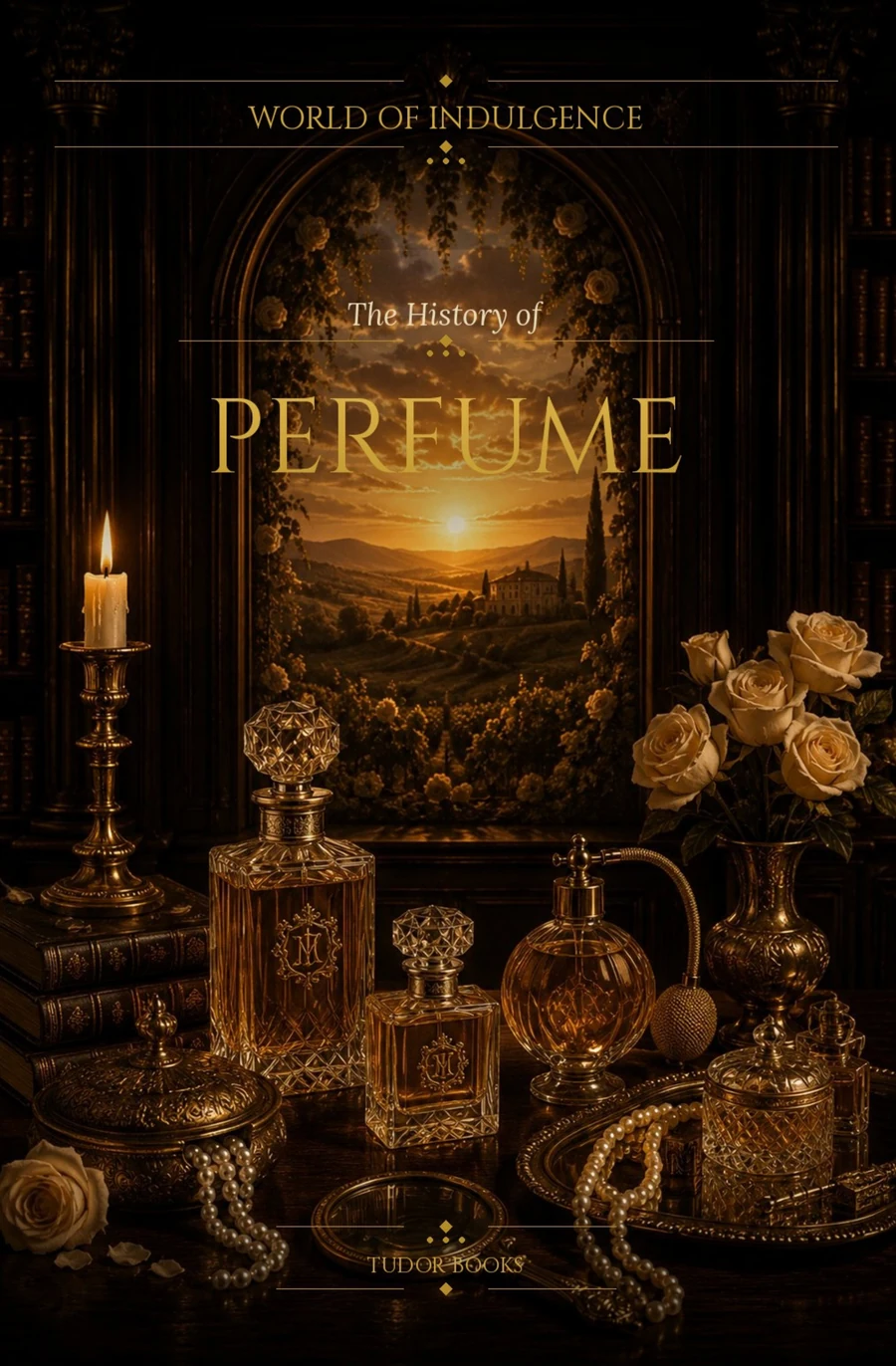
Opens the Amazon store you pick. Price and availability are shown on Amazon.
The History of Perfume follows scent from ancient ritual through classical worlds, distillation, French court culture, modern chemistry, fashion houses, and niche fragrance. The chapters show how makers and wearers gave smell social, spiritual, and artistic meaning. Explore the invisible craft behind an enduring luxury.
The twelve chapters begin with early fragrances and the place of scent in ritual. Classical settings, the development of distillation in the Arab world, Venice, and the French court mark changes in materials, making, and social use. The book treats perfume as something people create and wear within a culture, rather than as an isolated bottle.
Later chapters move through chemistry, the naming and presentation of fragrance, industrial production, and artistic choices. The introduction reflects on how difficult smell is to describe, which makes the book's historical focus especially useful: the practices and people surrounding a fragrance leave a record even when the scent itself cannot be fully recovered.
The chapters' geographic movement helps explain how techniques and tastes traveled. The Arab history of distillation is a different kind of contribution from the courtly language of French perfume, while modern chemistry opened other possibilities for materials and composition. Bottles, names, and the machinery of production then changed how a scent reached the public. Because a fragrance itself is fleeting, the book uses objects, records, and practices to reconstruct its world. Readers can follow both the invisible artistic effect and the very visible labor and commerce behind it.
For readers interested in fashion, craft, and cultural history, the volume offers a route from sacred smoke to modern perfume houses and niche scent. It is a narrative history, not a list of fragrances to buy or a promise that a particular perfume will suit a reader.
There is something about smell that resists explanation. You can describe a painting to someone who has never seen it — you can speak of color, proportion, the quality of light on a face — and they will have some approximate understanding of what you mean. You can describe a piece of music to someone who has never heard it, and the words pitch, rhythm, harmony will carry real meaning. But try to describe a smell. Try to convey, in words, the specific character of the first cold morning of autumn, or the exact smell of a grandmother’s kitchen, or the fragrance of a flower encountered once in a foreign city and never again encountered since. Language fails.
All 12 chapters in the book.
The contents list 12 chapters, shown in full on this page. The manuscript runs to roughly 80,000 words.
No. This page shows the contents and a short opening excerpt. The complete book is sold on Amazon (Paperback).
The book is sold on Amazon. Choose your country in the selector on this page to open the matching Amazon store.
A Global History of Hidden Wealth, Stolen Empires, Sacred Relics, and the Myths That Refuse to Die
Explore Lost Treasures & Cursed Riches →A Global History of Censorship, Suppressed Knowledge, and the Battle to Control What We Read
Explore Forbidden Books →A Global History of Forgery, Currency, and Trust
Explore History of Counterfeit Money →