Lost Treasures & Cursed Riches
A Global History of Hidden Wealth, Stolen Empires, Sacred Relics, and the Myths That Refuse to Die
Explore Lost Treasures & Cursed Riches →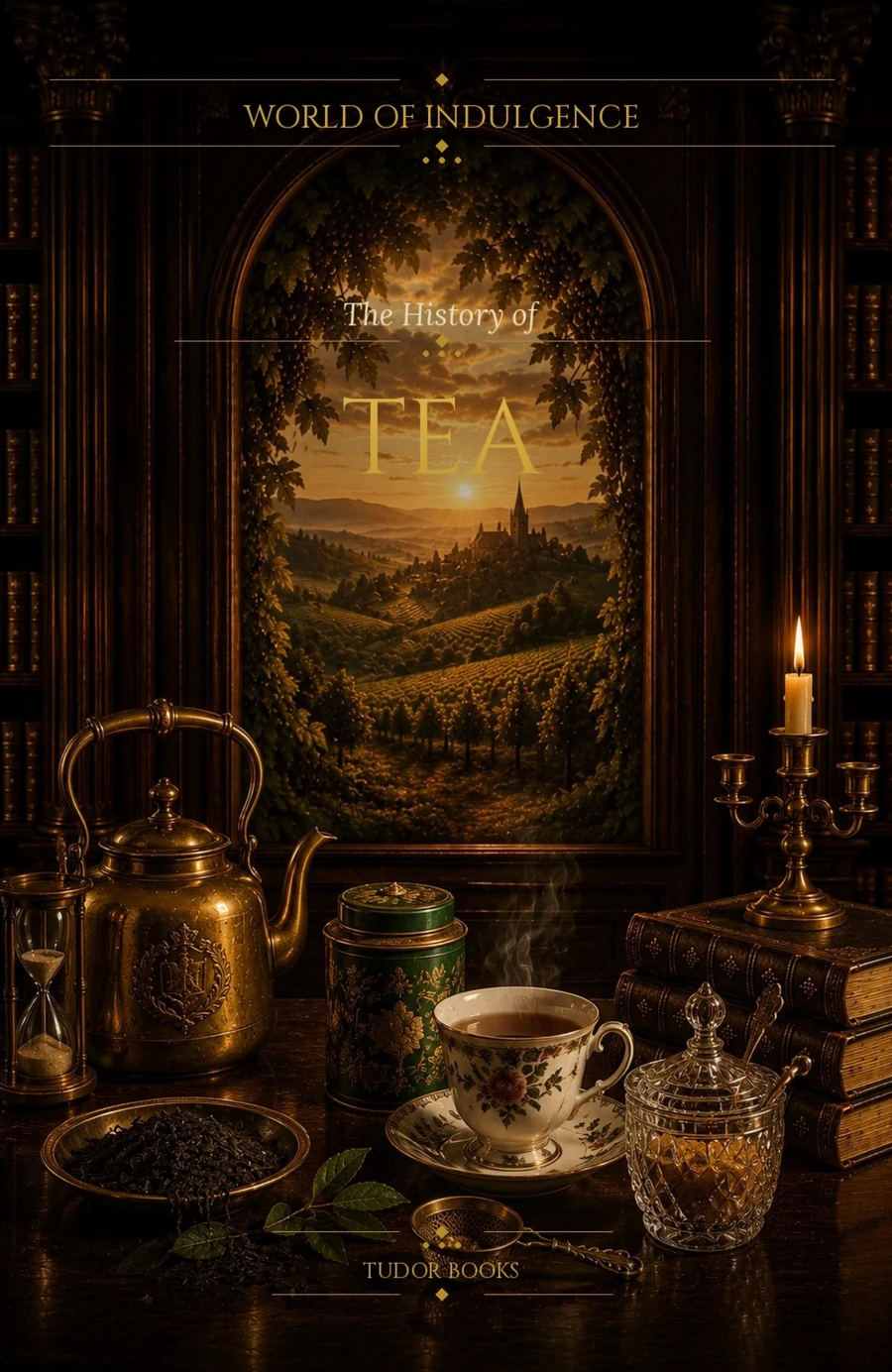
Opens the Amazon store you pick. Price and availability are shown on Amazon.
The History of Tea follows a leaf from ancient China across Asia and into a global trade. Scholars, monks, Japanese tea culture, British empire, plantations, afternoon tea, and modern tastes all shape the narrative. The book reveals how one drink became a ritual, commodity, and cultural language in many places.
The book begins with tea in China and follows its movement through Asian cultures before turning to global trade. Scholars, monks, and Japanese traditions show that a leaf could become part of study, ritual, and hospitality. Later chapters take up British empire, plantations, and the economics that carried tea to new markets.
The narrative also explores afternoon tea and other social customs, then considers modern tastes. The introduction distinguishes documented history from founding legends, an important caution for a drink surrounded by memorable origin stories. These different threads show tea as an agricultural crop, commodity, and language of everyday social life.
Tea's history is sometimes told as a collection of charming rituals, but the book places them beside the crop's movement through trade and empire. A scholar's cup, a Japanese practice, and a British afternoon custom belong to different social worlds. Plantation production adds questions of land and labor to the story of taste. The introduction's distinction between legend and record helps a reader enjoy traditional narratives without confusing them with dated evidence. The result is a cultural history with material roots: leaves had to be grown, transported, prepared, and given meaning.
Readers of cultural and beverage history can follow a broad chronological journey without expecting a guide to current brands. The book compares places and practices rather than presenting one universal way to prepare or appreciate tea. Its history helps explain how a familiar cup came to connect gardens, trade routes, and homes.
Tea is the most widely consumed beverage on earth after water. More than three billion cups are drunk every day. Its cultivation employs tens of millions of people across more than sixty countries. Its trade has shaped empires, financed wars, generated revolutions, and built fortunes on every inhabited continent. It has been the subject of philosophy and poetry, ceremony and science, commercial rivalry and cultural devotion, for more than two thousand years.
All 12 chapters in the book.
The contents list 12 chapters, shown in full on this page. The manuscript runs to roughly 115,000 words.
No. This page shows the contents and a short opening excerpt. The complete book is sold on Amazon (Paperback).
The book is sold on Amazon. Choose your country in the selector on this page to open the matching Amazon store.
A Global History of Hidden Wealth, Stolen Empires, Sacred Relics, and the Myths That Refuse to Die
Explore Lost Treasures & Cursed Riches →A Global History of Censorship, Suppressed Knowledge, and the Battle to Control What We Read
Explore Forbidden Books →A Global History of Forgery, Currency, and Trust
Explore History of Counterfeit Money →