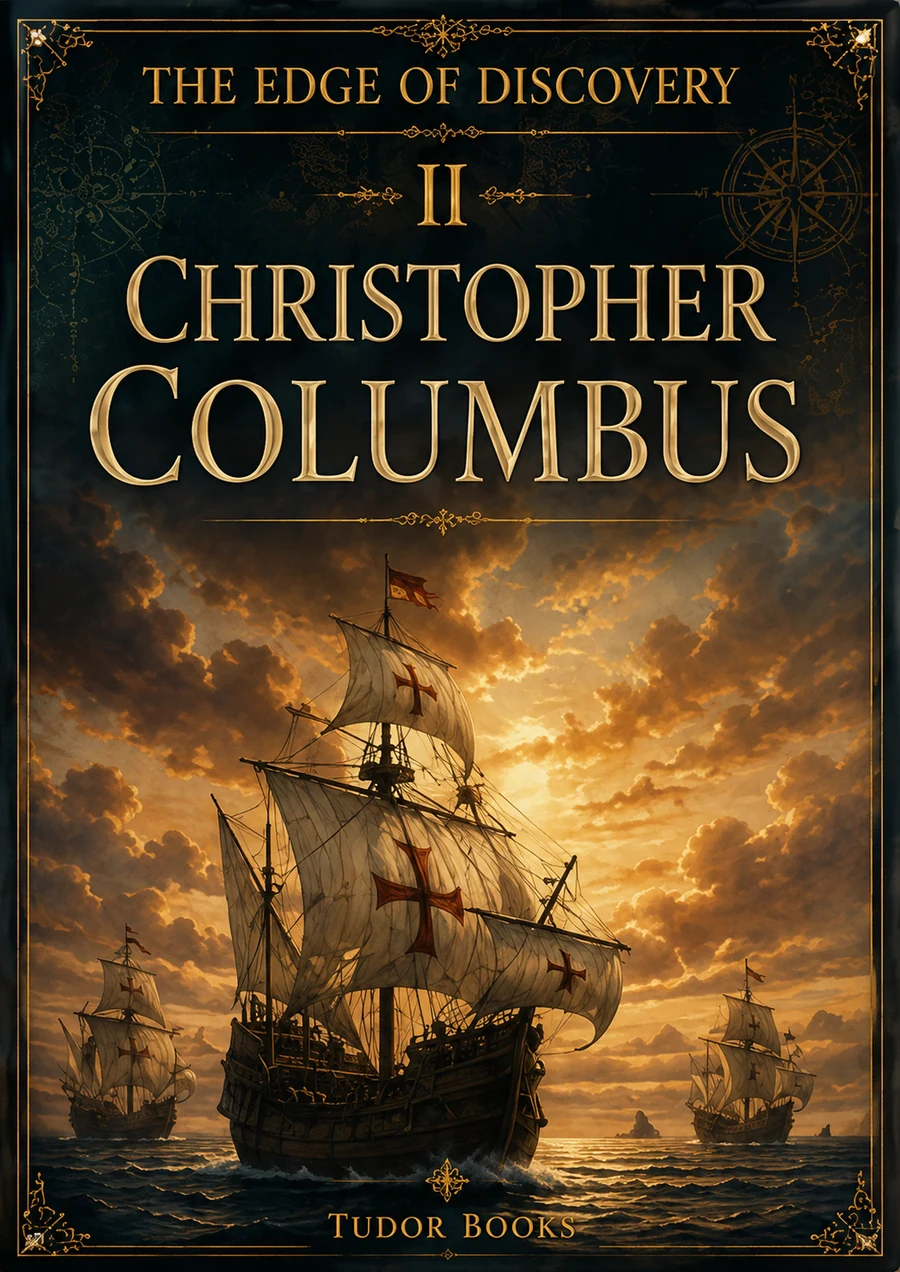
About Christopher Columbus
Christopher Columbus: The Edge of Discovery follows the navigator from the maritime world of Genoa into the voyages that connected Europe and the Americas. The narrative places his life within trade, ambition, uncertain geography, and the profound consequences of transatlantic contact. It is a historical account that looks beyond a single famous crossing.
The narrative starts in Genoa, with Columbus as a weaver's son learning a world of ships, trade, storms, and Mediterranean routes. Portugal's Atlantic frontier, marriage, maps, and books become part of his growing plan to sail west. Chapters on rejection in Portugal and Spain show that the voyage emerged through years of persuasion and political timing.
The fall of Granada, the Agreement of Santa Fe, and construction of the three-ship expedition set the Atlantic crossing in its historical moment. The manuscript follows uncertainty at sea and the decisions made aboard the fleet before the landfall for which Columbus is remembered. Later events are part of a history of encounters and conquest, not a story of finding an empty world.
Maps, books, and royal agreements are as important to the opening of this story as the ships themselves. Columbus's westward proposal moved through competing courts before the Agreement of Santa Fe gave it political backing. The narrative's attention to the fleet and crossing makes the voyage concrete, while the later context requires care with familiar language: the Americas were inhabited, and European arrival transformed lives and societies already there. Readers can follow how a navigational plan became a turning point in Atlantic history without treating the voyage as the beginning of the continent's human story.
Readers interested in Atlantic exploration can use the book to connect navigation, royal sponsorship, and the consequences of European expansion. Its biographical sequence makes the decisions legible without erasing the peoples already living in the Americas. This Edge of Discovery volume pairs naturally with books on other voyages for a broader view of how exploration has been narrated.