Dream Away
A Calming Picture Book for Seniors: Beautiful Scenes to Imagine, Remember and Share for Older Adults with Dementia…
Explore Dream Away →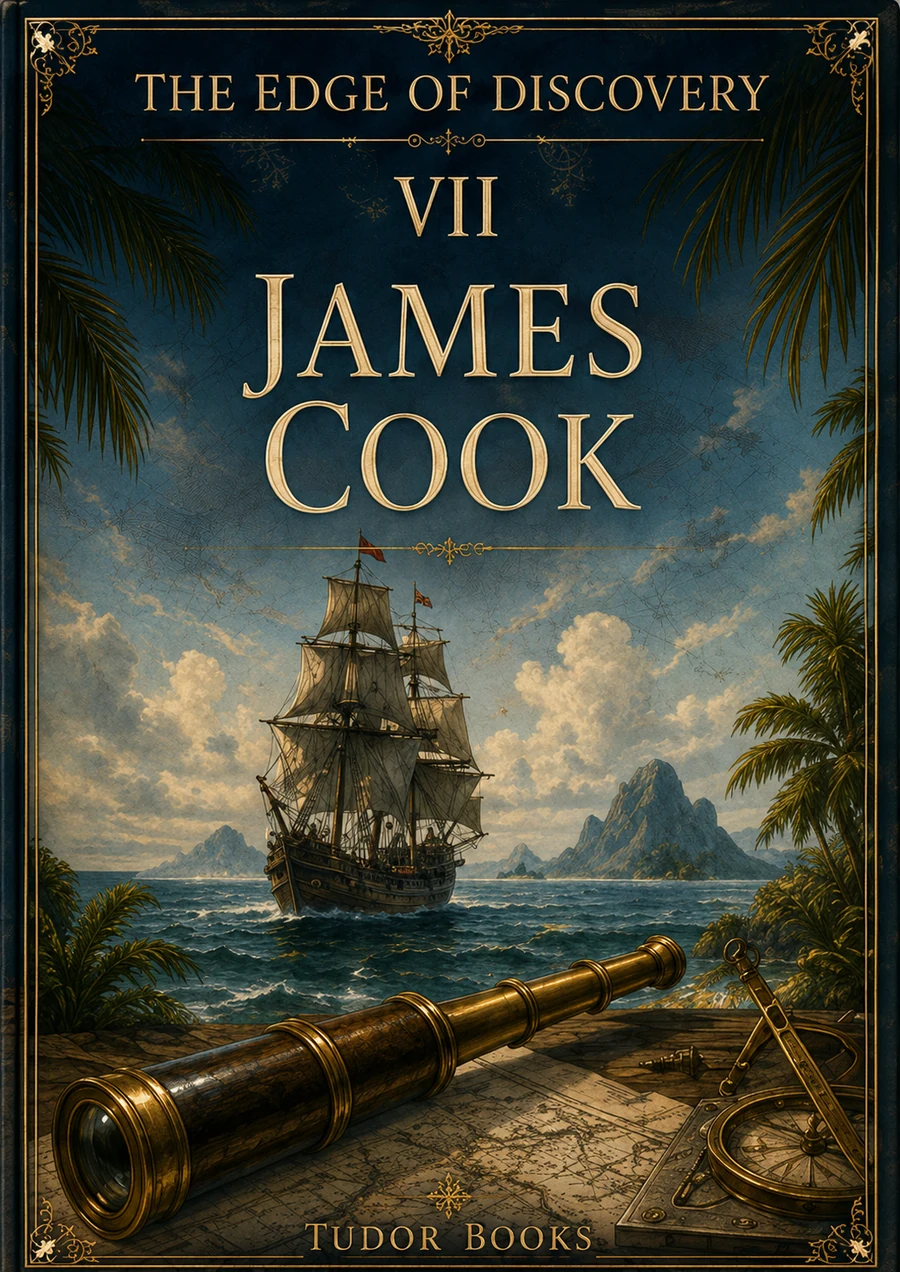
The Edge of Discovery
Opens the Amazon store you pick. Price and availability are shown on Amazon.
James Cook: The Edge of Discovery follows the navigator into the Pacific world of eighteenth-century maps, measurement, and exploration. Beginning with the gaps and speculation on European charts, this narrative history examines the voyages and the wider setting in which they took place. It is a focused account for readers interested in maritime exploration.
The opening chapters place Cook in the world of eighteenth-century seafaring, when European maps of the Pacific still contained gaps and speculation. The narrative then follows the navigator's voyages and the practical work of charting, observation, and command. Rather than treating exploration as a single moment of discovery, the book attends to the people, places, and knowledge already present in the regions the ships entered.
The voyage chapters invite attention to what ships could actually measure and carry. Maps and observations were made through instruments, crews, supplies, and decisions at sea, then interpreted by people far from the Pacific. Cook's name often stands for European “discovery,” but the book's setting is a region with existing peoples and knowledge. That contrast is part of the story. The narrative also shows how a captain's career became linked to larger projects of science and empire. For a reader starting with a famous name, the value lies in seeing the routes and their consequences in the same account.
For readers of maritime history, Cook's story joins technique and consequence. Routes and measurements explain why the voyages changed European geographic knowledge; encounters and imperial ambitions complicate what that change meant. The manuscript presents a focused narrative biography, so it can be read from beginning to end as well as consulted for an overview of a major Pacific expedition. It is also one volume in The Edge of Discovery series, whose subjects invite comparison across different eras of travel and conquest.
In the middle decades of the eighteenth century, a map of the Pacific spread across an Admiralty table would have shown not so much a representation of knowledge as a record of ignorance dressed in the language of confidence. The coastlines of the western Americas curved away in roughly plausible arcs; the eastern coast of Asia, traced by Dutch and Portuguese ships over more than two centuries, appeared in reasonable detail; but the vast interior of the ocean — more than a third of the earth's surface — was given over to speculation, to mythological geography, and to stretches of blank parchment that the engravers had left empty because there was nothing to put there.
All 40 chapters in the book.
The contents list 40 chapters, shown in full on this page. The manuscript runs to roughly 190,000 words.
The Edge of Discovery.
No. This page shows the contents and a short opening excerpt. The complete book is sold on Amazon (Kindle eBook; Paperback).
The book is sold on Amazon. Choose your country in the selector on this page to open the matching Amazon store.
A Calming Picture Book for Seniors: Beautiful Scenes to Imagine, Remember and Share for Older Adults with Dementia…
Explore Dream Away →Exact First Messages and Replies to Break the Ice on Tinder, Instagram, Facebook and in Real Life
Explore What Do I Say First? →A Visual Guide to Engagement Rings, Wedding Bands, Cultural Traditions, Gemstones, and Designs from Around the World
Explore 400 Wedding Rings and Their Meanings →